11 Best Non Toxic Mattress Brands (Organic & Low-VOC Picks)
WRITTEN BY: TESS • February 10, 2026
If you’re trying to live a healthier lifestyle, switching to a non toxic mattress is one of the most impactful places to start — yet it’s also one of the most confusing.
We spend roughly a third of our lives sleeping, breathing inches away from our mattress for hours every night… and many conventional mattresses are made with materials that can off-gas chemicals long after you bring them home.
You don’t need to panic or throw your current mattress out immediately. And you definitely don’t need to spend $10,000 to find a safer option.
This guide breaks down what actually matters, what’s mostly marketing, and which organic mattress brands are genuinely doing things better — so you can make an informed decision that works for you.
My Top Non‑Toxic Mattress Picks
- Best overall organic mattress: Avocado
- Best for sensitive sleepers: Naturepedic
- Best affordable option: My Green Mattress
- Best customizable: Savvy Rest
Why Your Mattress Matters
What could possibly be so different between mattresses? Aren’t they all basically created the same way?
Well… not exactly. Doing your research and choosing a mattress made from better materials really does matter. Here’s why.
The average person sleeps for 6-9 hours a night. During that time your body is essentially in direct contact with your mattress. Not only are you lying on it but your airway (nose/mouth) are also in very close contact. Most conventional mattresses are made with polyurethane foam, synthetic adhesives, flame retardants, and synthetic covers that can off-gas over time.
Another thing most people don’t realize is that your mattress actually warms up while you sleep. Body heat, pressure, and humidity can increase how much these materials off-gas. And since bedrooms usually have less ventilation overnight, those compounds can build up in the air you’re breathing. In one study, they found that the tested mattresses released more VOCs when temperature was elevated to simulate body heat (2).
So yes, what your mattress is made of matters. It’s not just a piece of furniture — it contributes to your indoor air quality and overall home environment.
What Makes a Mattress “Non-Toxic”?
First, I think it’s important to point out that there is no single legal definition of a “non-toxic mattress”.
Unfortunately, “non-toxic” has become a marketing term that many companies are now using to appeal to health-minded individuals which can make the research process all the more confusing.
In general, a non-toxic mattress avoids materials that are known to release harmful chemicals into indoor air and instead prioritizes safer, lower-emission materials.
Here’s what I look for in a better-for-you mattress:
- No polyurethane foam
- No flame retardants
- Use of certified organic materials such as cotton, wool or latex
- Safety certifications for low VOC emissions (MADE SAFE or GREENGUARD Gold)
- 100% transparency from brands
As a general rule of thumb, when looking for a better, healthier mattress, the focus should be less on labels and marketing buzzwords and more on the materials used and the certifications behind them.
Common Materials In Conventional Mattresses
Many conventional mattresses are made from a combination of synthetic materials such as:
- polyurethane foam
- adhesives and glues
- chemical flame retardants
- vinyl covers
If you’ve ever owned a memory foam mattress, polyurethane foam was likely the main material inside. It acts as the cushion or filling of the mattress and is used because it’s inexpensive and easy to manufacture.
The issue is that polyurethane foam is a petroleum-based material made with various chemical ingredients. Over time—especially when the mattress is new—these foams, along with adhesives and flame retardants, can release volatile organic compounds (VOCs) into the air.
VOCs are chemicals that turn into gas at room temperature. Some that have been detected in conventional mattresses include substances like formaldehyde, toluene, and certain phthalates (1). Formaldehyde is classified as a known carcinogen by the International Agency for Research on Cancer (IARC).These VOCs have been linked to things like headaches, respiratory irritation, and hormone disruption in some studies.
To meet flammability regulations, many conventional mattresses are also treated with chemical flame retardants. Some of these compounds have been found to accumulate in household dust, which can affect indoor air quality over time.
The outer cover of some mattresses is also made with vinyl or other plastic-based materials that may contain chemicals like phthalates or PFAS.
Again, this isn’t meant to scare you or make you feel like you need to replace your mattress immediately. It’s just about being aware of what’s common in conventional mattresses so you can make small, more informed upgrades over time.
read: how to detox your bedroom in 7 steps
Certifications That Actually Matter
Certifications aren’t everything, but they’re one of the best tools we have for transparency. These are the ones I pay attention to:
- GREENGUARD Gold: Tests for low chemical emissions and is one of the stricter indoor air quality certifications.
- MADE SAFE: A strict human health and ecosystem certification program, striving to eliminate the use of harmful chemicals in consumer products.
- GOTS (Global Organic Textile Standard): Ensures textiles like cotton and wool are organic and processed without harmful chemicals.
- GOLS (Global Organic Latex Standard): Confirms latex is organic and meets strict environmental and toxicity standards.
- OEKO‑TEX Standard 100: Screens for harmful substances in finished products.
- CertiPUR‑US: Better than nothing, but still allows polyurethane foam — I view this as bare minimum.
Certifications are a great first place to look to quickly gauge the quality of materials used in the mattress as well as a brands transparency. GREENGUARD Gold and MADE SAFE are two certifications that I definitely look for because they have strict standards for product safety.
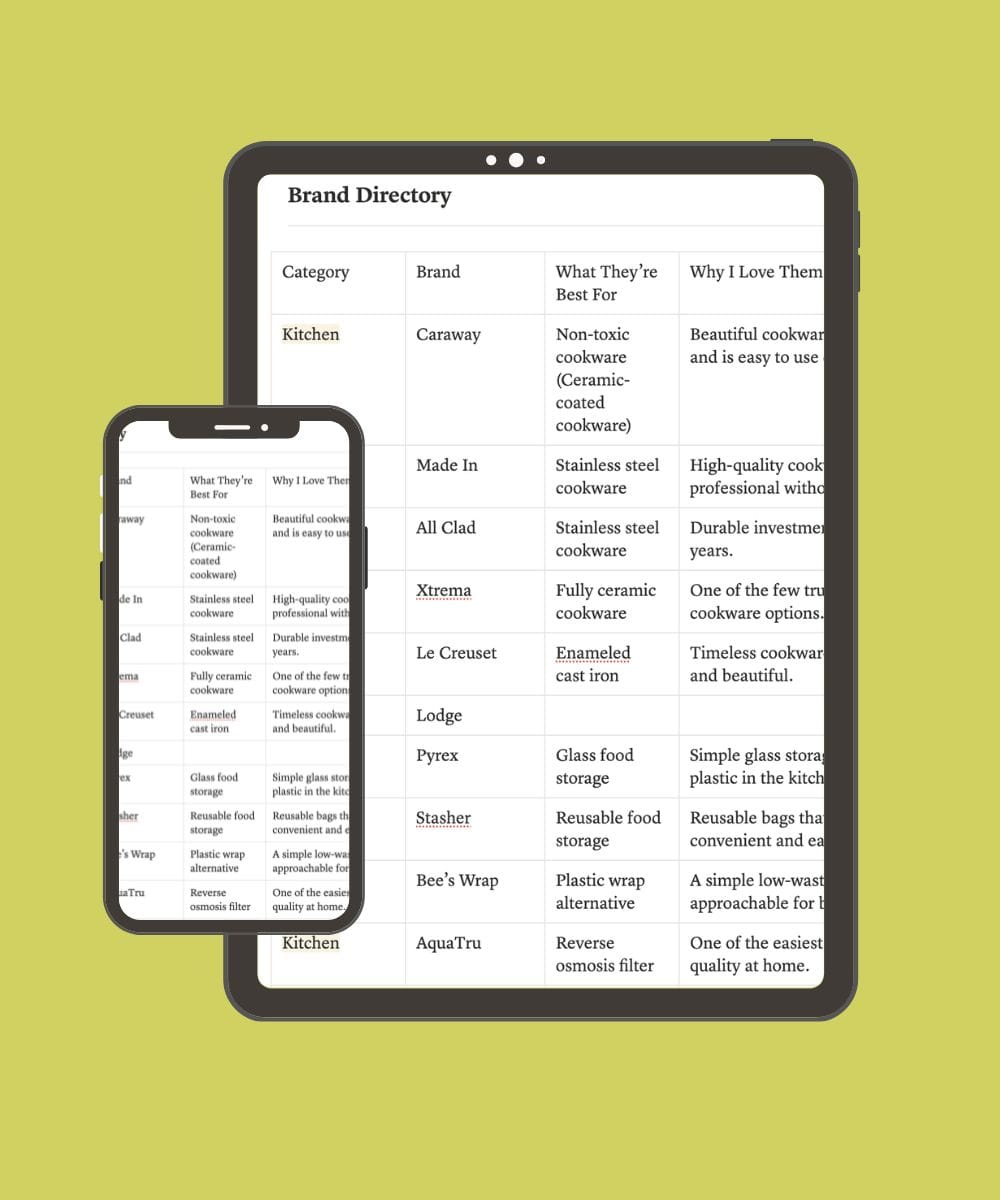
Steal my curated list of trusted non-toxic brands
Skip the overwhelm and get a carefully selected list of brands I personally use and recommend for a lower-tox home, personal care, and everyday essentials.
Mattress Materials: What to Look For (and What to Avoid)
Materials To Look For
- Organic latex: Naturally antimicrobial, durable, and supportive. Dunlop latex tends to feel firmer; Talalay is usually softer and more pressure‑relieving.
- Organic cotton: Used for covers and quilting instead of synthetic fabrics.
- Organic wool: Acts as a natural flame barrier, eliminating the need for chemical flame retardants.
Materials To Avoid or Limit
- Polyurethane foam
- Chemical flame retardants
- Synthetic fragrances
- Vinyl or PVC mattress covers
Again — this is about lowering exposure, not achieving perfection!
Best Non‑Toxic Mattress Brands (2026 Picks)
If you’re feeling overwhelmed by all the options out there, you’re not alone. The brands below are some of the most trusted in the non-toxic mattress space and use materials and certifications that actually mean something. These are all companies I’d personally consider when shopping for a healthier mattress.
Naturepedic

Naturepedic is well known for its strict standards and family‑friendly designs. They avoid polyurethane foam entirely and focus on organic, low‑VOC materials.
Their mattresses are made from an organic cotton and wool fill, and zero adhesives or glues making it a great choice for those with sensitivities or latex allergy.
They have ready-to-buy options for the whole family (including cribs!) but you can also customize your mattress, too!
- Best for: Those with sensitivities, baby & kids
- Materials: Organic cotton, organic wool, optional latex
- Certifications: GOTS, GREENGUARD Gold, MADE SAFE Certified
- Firmness: Multiple options, including customizable
- Price range: $$$–$$$$
Avocado Green Mattress
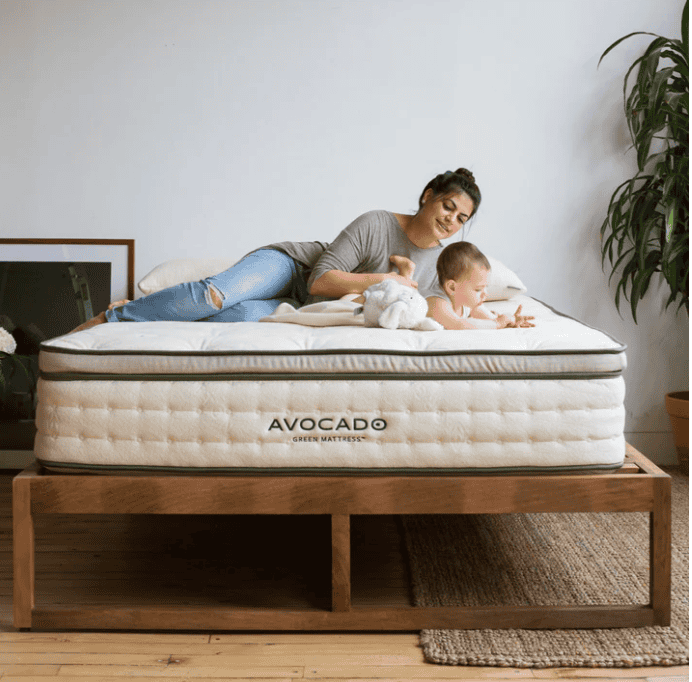
Avocado is one of the most well‑known names in the non‑toxic mattress space — and for good reason.
Their mattresses use organic latex, organic cotton, and organic wool, and they are completely transparent about materials, sourcing and certifications.
They have several mattress options so you don’t have to compromise on comfort, style or safety.
- Best for: People who want a truly organic mattress with strong certifications
- Materials: GOLS‑certified organic latex, GOTS‑certified cotton & wool
- Certifications: GOTS, GOLS, GREENGUARD Gold, MADE SAFE Certified
- Firmness: Medium‑firm to firm
- Price range: $$$
My Green Mattress
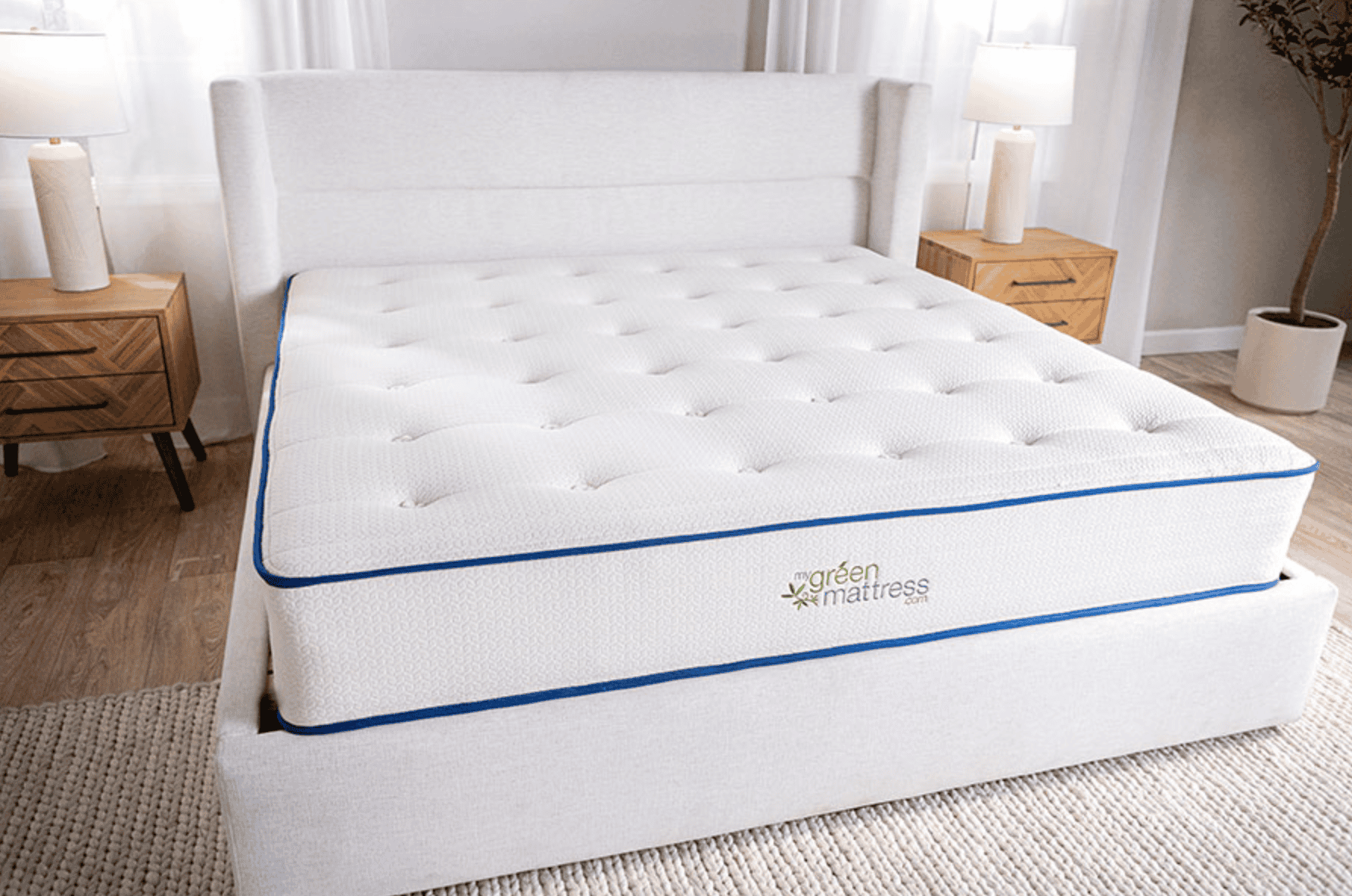
My Green Mattress is a family-owned company that started with a passion to create safe mattresses made from cleaner materials.
All of their mattresses are made to order in the USA in a GOLS and GOTS certified organic factory.
Their mattresses are made from organic Dunlop latex, cotton and wool. And get this – they offer a 20-year warranty so you know they’re serious about the quality of their products.
- Best for: Most affordable certified organic mattress options
- Materials: Organic latex, organic cotton, organic wool, coils
- Certifications: GOTS, GOLS, GREENGUARD Gold, MADE SAFE Certified
- Firmness: Medium-firm to firm options
- Price range: $$ – $$$
Evaya
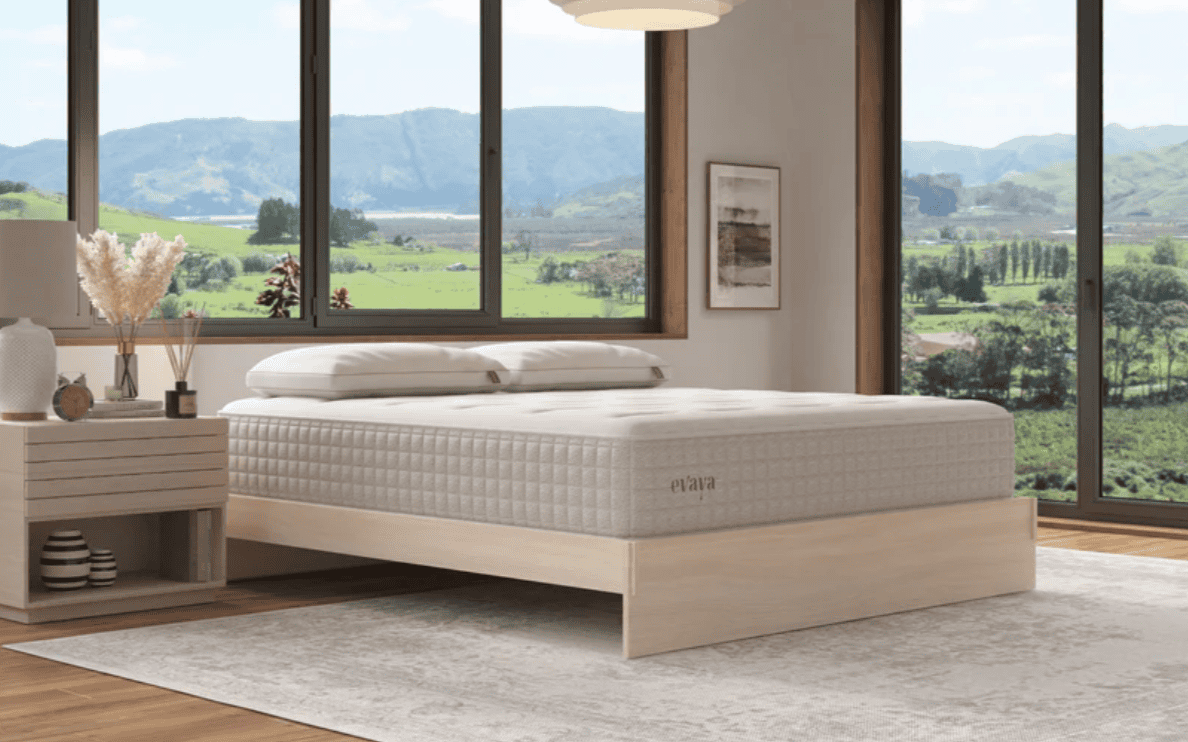
Evaya is another amazing organic mattress brand that is fully transparent down to the smallest detail.
Their mattresses are made from organic pure New Zealand wool, certified organic Talalay latex, organic cotton and pocketed springs from up-cycled steel and manufactured in the USA.
Evaya offers three different mattress options which firmness options ranging from firm-plush so you’re bound to find one you love.
- Best for: High-quality luxury mattresses
- Materials: Organic latex, organic cotton, organic wool, springs
- Certifications: GOTS, GOLS, MADE SAFE
- Firmness: Typically medium to medium-firm
- Price range: $$–$$$
Happsy (by Naturepedic)

Happsy is Naturepedic’s more affordable line. It also uses certified organic latex, wool and cotton in their mattresses.
Their mattresses are made in the USA in a certified organic factory so you can rest easy knowing there’s no contamination in the manufacturing process.
Happsy offers one mattress that you can select in medium-firm or plush. It’s also the first organic ‘bed-in-a-box’!
- Best for: A more budget-friendly organic option from a trusted brand
- Materials: Organic latex, organic cotton, organic wool, coils
- Certifications: GOTS, GOLS, GREENGUARD Gold, MADE SAFE, EWH Verified
- Firmness: Medium-firm, Plush
- Price range: $$-$$$
Plush Beds

PlushBeds specializes in certified organic latex mattresses and offers a wide range of firmness levels.
Their mattresses are made in their certified organic manufacturing factory in California. They use only certified organic latex, wool and cotton and also offer options with or without coils.
- Best for: Luxuriously soft mattresses & multiple firmness choices
- Materials: Organic latex, organic cotton, organic wool
- Certifications: GOTS, GOLS, GREENGUARD Gold
- Firmness: Soft, medium, medium-firm, and firm
- Price range: $$$–$$$$
Savvy Rest
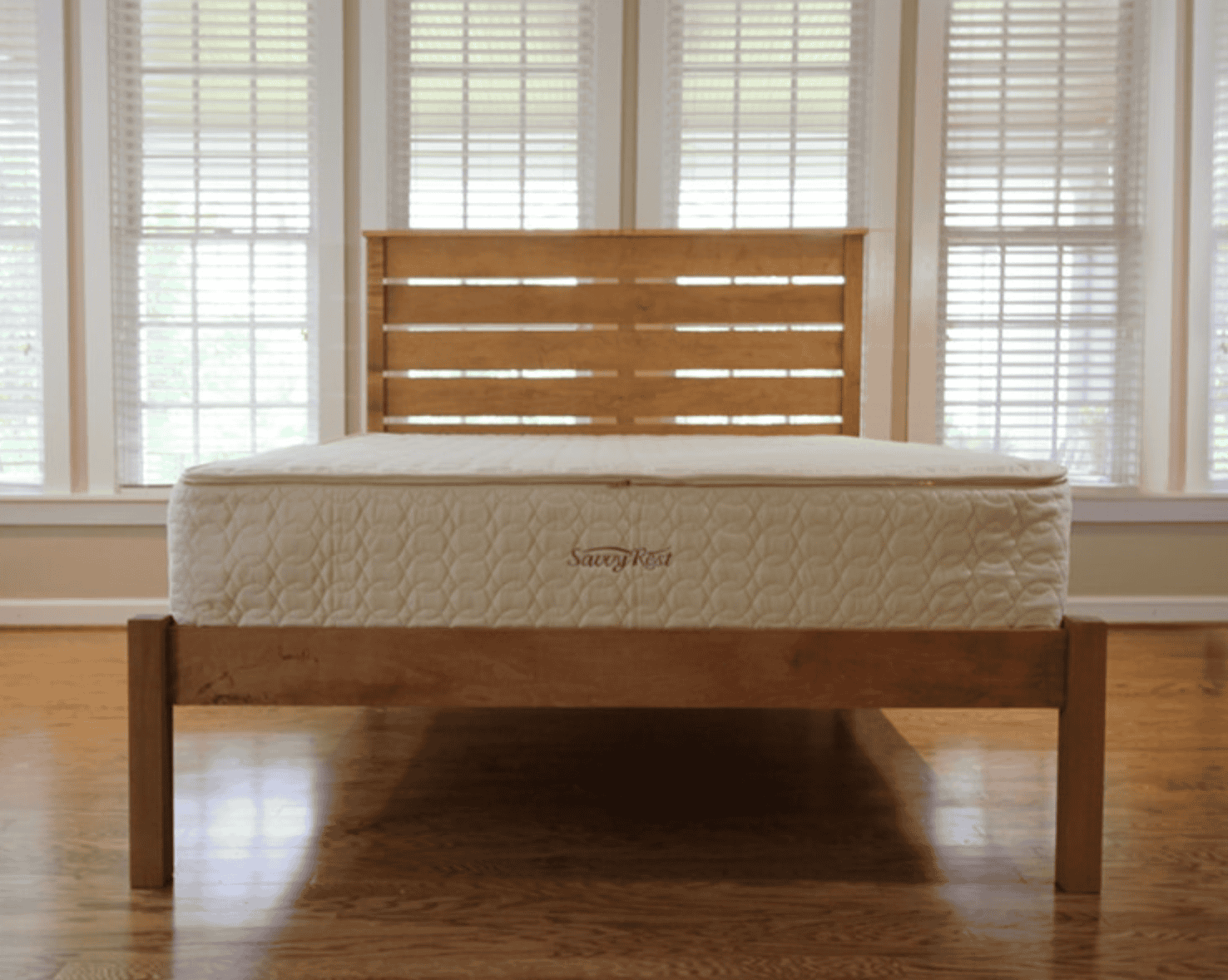
Savvy Rest is a super unique brand known for its ultra customizable organic mattresses.
You can choose different firmness layers (Dunlop or Talalay), couples can customize both sides of a mattress to have different firmness levels, and so much more.
They only use organic latex, cotton and wool that is certified and even manufactured in a GOTS-certified facility so you know the brand truly cares.
- Best for: Fully customizable, high-end organic mattresses
- Materials: GOLS organic latex, GOTS organic cotton and wool
- Certifications: GOLS, GOTS
- Firmness: Highly customizable
- Price range: $$$$
Birch

Birch is a popular choice for people who want a more natural mattress without going fully organic or ultra high-end.
Their mattresses are made from organic latex, cotton and wool sourced from New Zealand.
A good option for a better-for-you mattress at a more affordable price.
- Best for: A cleaner hybrid mattress at a mid-range price
- Materials: natural latex, organic cotton, and wool (typically sourced from New Zealand)
- Certifications: GOLS, GREENGUARD Gold
- Firmness: Medium-firm
- Price range: $$–$$$
Awara

Awara offers a latex hybrid mattress that uses natural materials at a more accessible price point.
While not fully organic across all components (only GOLS certified), it’s a popular option for people looking to reduce their chemical exposure without spending at the top end of the market.
- Best for: A more affordable latex hybrid option
- Materials: Organic latex, cotton, New Zealand wool, coils
- Certifications: GOLS
- Firmness: Medium-Firm
- Price range: $$
Silk & Snow (Organic Mattress)

Silk & Snow’s is a Canadian brand. They offer an organic mattress option that combines certified organic latex, wool and cotton with spring coils made from double-tempered Canadian steel.
Their organic mattress comes in three firmness options to suit your preferences.
It’s a good, organic mattress option for a more affordable price.
- Best for: A Canadian-made organic hybrid mattress option
- Materials: Organic latex, organic cotton, organic wool, spring coils
- Certifications: GOTS, GOLS
- Firmness: Firm, Medium-firm, Plush
- Price range: $$–$$$
What if you can’t replace your mattress just yet?
If you’re like me and aren’t at the point where you can replace your mattress just yet, there are definitely several things you can do to help minimize your exposure and improve your air quality:
- Maintain good ventilation in your room – open your windows every morning to bring in fresh air
- Vacuum your mattress weekly (strong, HEPA-filter vacuums are best)
- Use an organic cotton mattress cover
- Opt for an organic latex or wool mattress topper (acts as a barrier between your synthetic mattress and yourself)
- Use a HEPA-filter air purifier like the AirDoctor or Jaspr to help trap dust and VOCs from your indoor environment
- Switch to organic bedding made from cotton or linen
An organic mattress is an investment (trust me, I get it!) so don’t feel that you need to make this swap ASAP. Just do what you can to minimize exposure, and you’re already making a positive change for your health.
Don’t Forget the Rest of Your Sleep Setup!
Your mattress is important, but it’s only one part of your sleep environment. Non‑toxic sheets, pillows, and mattress protectors can also make a meaningful difference — especially since they’re directly against your skin.
FAQs
What is the most non toxic mattress material?
The most common non toxic mattress materials are organic latex, organic cotton, and organic wool. These materials are naturally low in emissions and don’t require chemical flame retardants or synthetic foams.
Latex, in particular, is popular because it’s durable, supportive, and naturally resistant to mold and dust mites, and organic wool is naturally flame resistant.
Are memory foam mattresses toxic?
Most memory foam mattresses are made from polyurethane foam, which is a petroleum-based material. These foams can release VOCs, especially when the mattress is new.
That doesn’t automatically mean every memory foam mattress is “dangerous,” but many people prefer to avoid them and choose organic latex or organic materials instead to reduce their overall exposure.
Do non toxic mattresses off-gas?
Even non toxic mattresses can have a mild smell at first, especially those made with latex or wool. This is usually a natural material scent and should fade within a few days.
Strong, chemical-like odours that last for weeks are more common with synthetic foam mattresses.
Are organic mattresses worth the price?
Organic mattresses are typically more expensive because they use certified organic materials and stricter manufacturing standards. However, they’re also often more durable and longer-lasting than conventional foam mattresses.
For many people, the combination of better materials, improved indoor air quality, and longer lifespan makes the investment worthwhile. Plus, many organic mattress brands offer extended warranties because they stand behind the quality of their products.
(1) Beckett et al., 2022. Evaluation of volatile organic compound (VOC) emissions from memory foam mattresses and potential implications for consumer health risk. https://doi.org/10.1016/j.chemosphere.2022.134945
(2) American Chemical Society. (2019, July 11). Mattresses could emit higher levels of VOCs during sleep. ScienceDaily. Retrieved February 5, 2026 from www.sciencedaily.com/releases/2019/07/190710103211.htm