Non Toxic Food Storage: The Best Plastic-Free Options
WRITTEN BY: TESS • January 2, 2026
If you’re trying to create a non toxic kitchen, food storage is usually one of the first things people look at — and honestly, one of the most confusing.
I mean… plastic containers, zip-top bags, cling wrap — they’re cheap, convenient, and probably already filling your cupboards. Mine definitely were. But once you start learning about how some plastics can interact with food (especially heat, fat, and acidic foods), it suddenly feels a lot less simple.
And then comes the overwhelm. Glass? Stainless steel? Silicone? Beeswax wraps? Some options are expensive, some feel impractical, and it’s not always clear what actually makes a difference versus what’s just nice marketing.
So let me say this first: you do not need to throw everything out or spend hundreds of dollars to make better choices.
In this post, I’ll walk you through:
- Which food storage materials are safest (and which ones I try to avoid)
- How plastics interact with food and heat
- Realistic, non toxic food storage options for everyday life
- How to transition slowly, without stress or guilt
Whether you’re just starting out or slowly cleaning up your kitchen, my goal is to help you make changes that feel doable — not overwhelming.
Why Food Storage Matters in a Non Toxic Kitchen
If there’s one place in the kitchen where small changes really add up, it’s food storage.
Think about it — food often sits in containers for hours or days at a time. Then we reheat it. Sometimes it’s oily, acidic, or still warm when it goes into the container. All of those things can increase the chances of chemicals or microplastics transferring into food, especially when plastic is involved.
Leftovers, packed lunches, meal prep, reheated dinners — we use food storage constantly. That’s why I see it as a smart place to prioritize changes, even if the rest of your kitchen transition happens slowly.
Materials to Avoid in Food Storage Containers
You don’t need to be afraid of every container you own. This is just about knowing what’s best used sparingly and what’s worth replacing over time.
Plastic (Even “BPA-Free”)
I used to feel pretty good about anything labeled BPA-free — until I learned that BPA is often replaced with similar chemicals that aren’t necessarily better.
Plastic also breaks down over time, especially when it’s scratched, heated, or washed in the dishwasher. When that happens, it can shed microplastics or leach chemicals into food.
Plastic tends to be most problematic when used for:
- Hot foods
- Reheating in the microwave
- Oily or acidic foods
- Long-term storage
If you’re able, I’d slowly work toward replacing plastic containers with glass — starting with the ones you use most often.
One thing I really want to point out here: “microwave safe” does not mean non-toxic.
That label simply means the container won’t melt or warp in the microwave. It doesn’t mean chemicals won’t migrate into your food when heat is involved. That realization alone changed how I used a lot of containers I already owned.
Plastic Wrap & Single-Use Bags
Thin plastics like cling wrap and disposable bags degrade quickly and are more likely to transfer chemicals into food.
I’m not saying you need to panic if you use them occasionally — I still do sometimes. But I try to reserve them for cold foods or dry snacks and avoid wrapping hot food altogether.
Old or Scratched Containers
If a container is scratched, cloudy, warped, or just looks tired, that’s where I’d start replacing first. Those are signs the material is breaking down, and they’re more likely to leach chemicals.
The Safest Non Toxic Food Storage Materials
Okay — now for the good news. There are safer, practical options that work for real life.
When it comes to non toxic food storage, I look for materials that are stable, durable, and non-reactive.
Glass (My Everyday Go-To)
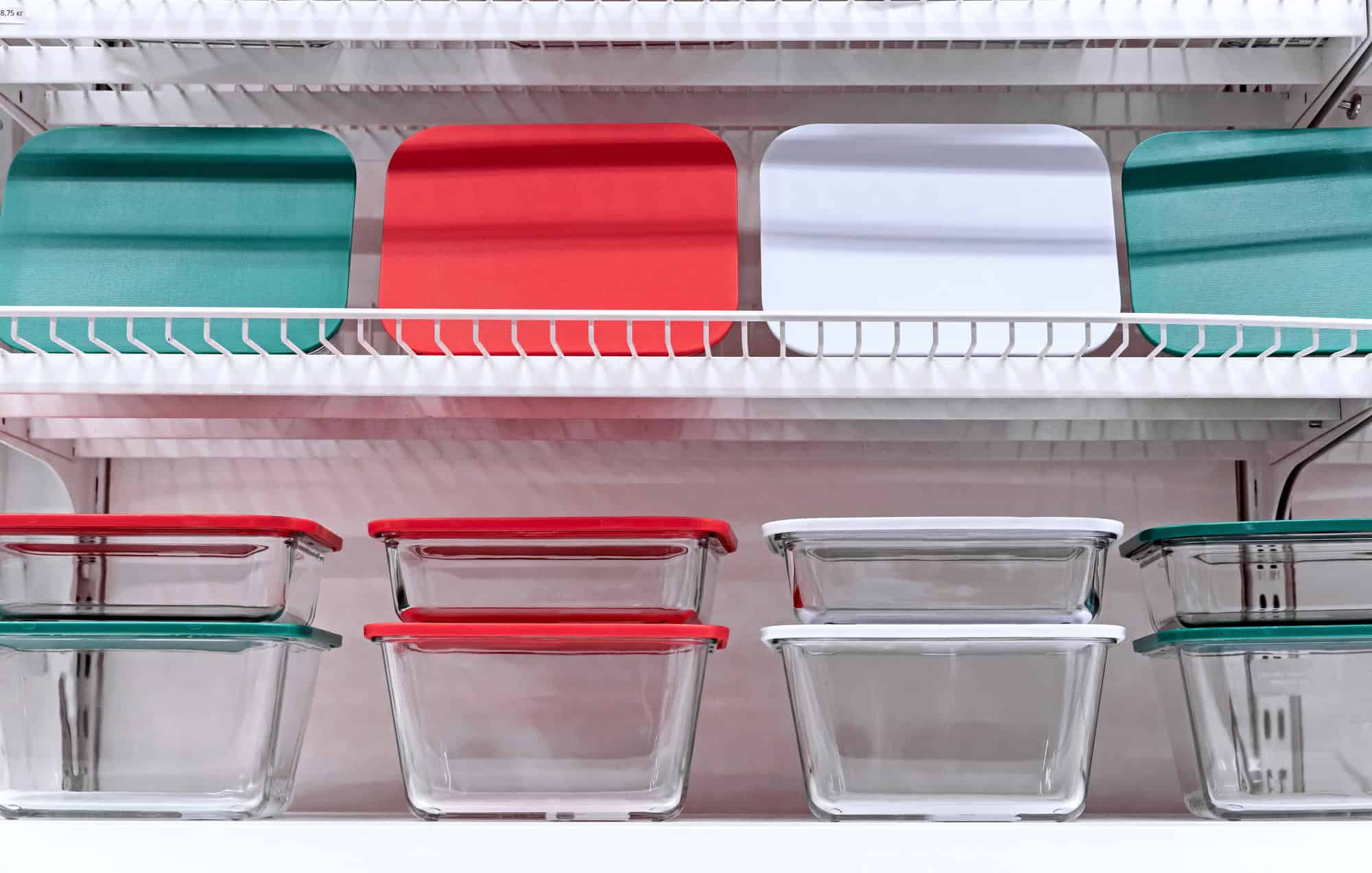
Glass is hands-down my most used option. I use it everyday for packed lunches, storing leftovers and even freezer storage.
I love that it doesn’t absorb smells, it’s safe for hot food, and I never have to second-guess it. I use glass for leftovers, meal prep, fridge and freezer storage, and reheating.
For everyday leftovers and meal prep, I use this simple set of glass containers — they’re durable, easy to clean, and make it really easy to pack lunches and snacks with all the different sizes.
Pros:
- Non-reactive and won’t absorb odors or stains
- Safe for hot foods and reheating
- Long-lasting and easy to clean
Cons:
- Heavier than other options
- Can break when dropped
Stainless Steel
Stainless steel is another great option for on-the-go storage and packed meals. Best used for packed lunches, snacks, dry foods, and as travel containers. This stainless steel container set comes in three different sizes.
Pros:
- Lightweight and extremely durable
- Doesn’t retain odours
- Great for travel and lunches
Cons:
- Not microwave-safe
Silicone (When It’s High Quality)
Silicone is… okay. It’s not my personal favourite, but it can be useful when it’s high quality like these Stasher reusable silicone bags.
If you go this route, look for food-grade silicone from reputable brands. Low-quality silicone can retain odors or degrade over time. I mostly use silicone bags for snacks or freezer storage.
Pros:
- Flexible and lightweight
- Freezer-friendly
- Good plastic bag alternative
Cons:
- Quality varies a lot
- Can absorb smells if poorly made
Beeswax Wraps
Beeswax wraps are my favourite replacement for cling wrap.
They’re great for covering bowls, wrapping produce, or packing sandwiches — just not for hot food or anything that needs to be airtight.
When I’m replacing cling wrap, I use the Bees Wrap beeswax wraps — they’re reusable, work great for covering bowls or wrapping produce, and make it easy to replace cling.
Pros:
- Reusable and compostable
- Works well for produce and sandwiches
Cons:
- Not airtight
- Not suitable for raw meat or hot foods
How to Switch to Non Toxic Food Storage Without Wasting Money
If you’re cleaning up your food storage, please remember — you don’t have to do it all at once (unless you want to).
What usually works best:
- Start with replacing plastic containers used for hot food
- Swap cling wrap for beeswax wraps next
- Replace things gradually as they wear out
You also don’t need fancy containers. Simple glass sets from Amazon or even the grocery store work just fine.
Slow, intentional changes are what make this sustainable!
My Recommended Non Toxic Food Storage Essentials
If you’re not sure where to start, these basics cover almost everything:
- Glass containers in a few versatile sizes
- A couple of high-quality silicone storage bags
- Beeswax wraps for short-term storage
You can build from there as needed — no massive overhaul required.
Creating a Safer Kitchen Without Overwhelm
Switching to non toxic food storage doesn’t mean throwing away your entire kitchen overnight.
Start with what you use every day — especially containers for hot food, leftovers, and packed meals — and build from there. Even a few thoughtful swaps can significantly reduce unnecessary exposure over time.
If you’re continuing your non toxic kitchen journey, these posts can help:
- Non Toxic Cookware: The Safest Materials (And What to Avoid Completely)
- Non Toxic Kitchen Swaps That Actually Matter
- The Best Non-Toxic Dishwasher Tablets
And remember — a non toxic kitchen isn’t about being perfect. It’s about making informed choices that support your health long-term, one step at a time.